Founder & engineering team
The engineer behind the system. The competitor behind the standard.
ARMAX was created where high-performance engineering meets the unforgiving discipline of F/TR long-range rifle competition.
The full story
Precision starts long before the shot.
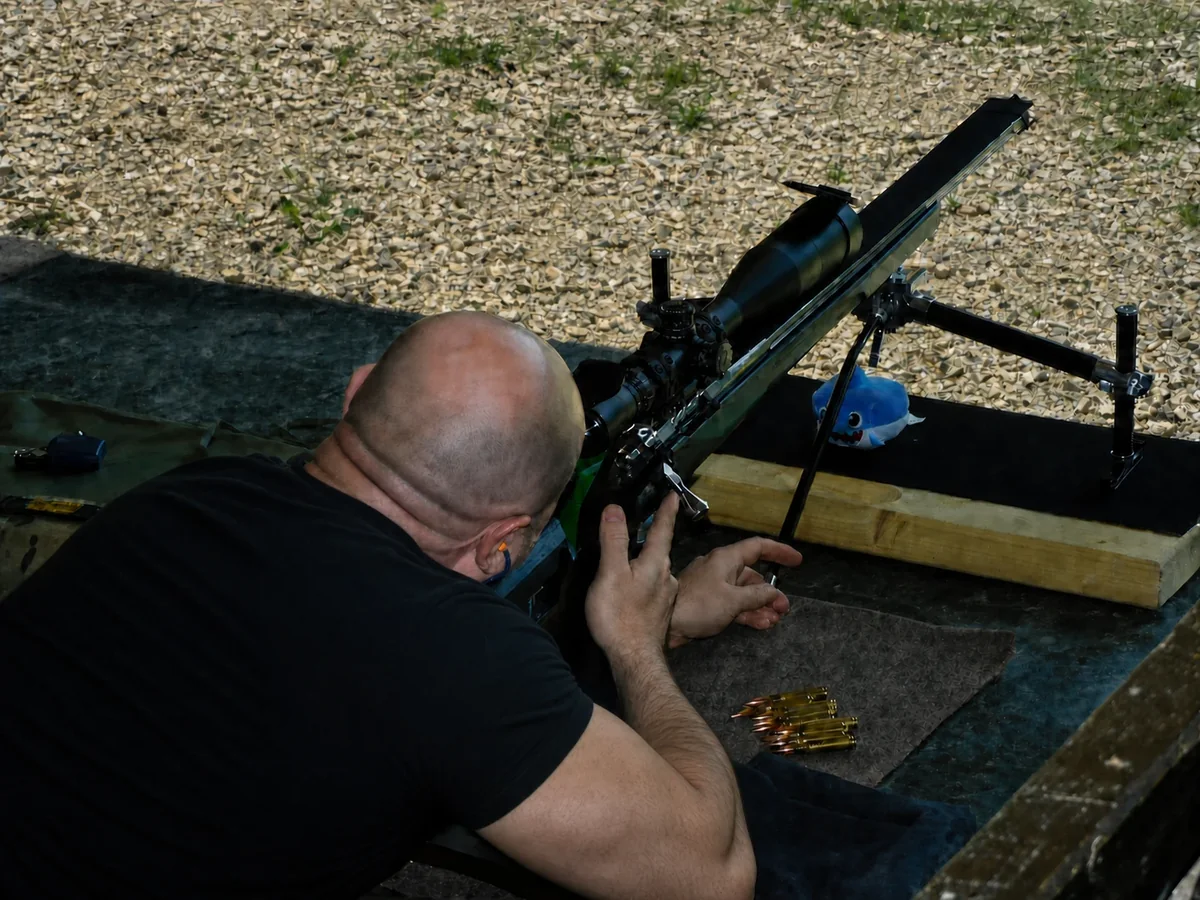
Milan Veljkovic is the founder of ARMAX and the engineer behind its original concept—a purpose-built ammunition conditioning system created at the intersection of advanced engineering and competitive long-range shooting.
Milan holds a master’s degree in Automation and Robotics and is currently completing his doctoral studies. For the past 18 years, he has led an engineering company specializing in high-performance building climate systems: heating, cooling, ventilation, building automation and control, and energy-performance optimization.
The company’s work is focused primarily on technically demanding five-star hotels, where climate stability, system integration, energy efficiency, reliability, commissioning, and continuous operation are not optional. Every system must perform under real operating conditions, every control decision must be measurable, and every failure point must be addressed before the building is handed over.
Where engineering meets competition
For more than ten years, Milan has competed actively in F/TR long-range rifle shooting—a discipline built around load consistency, wind reading, equipment control, and repeatable execution at extended distance. As a Serbian National Champion in F/TR, his understanding of precision is measured not only in engineering specifications, but on the target.
ARMAX was not conceived in a marketing meeting. Milan created the original concept to control the environmental condition of his own competition ammunition before it reached the rifle. The first prototype was built for his personal use. The second was built for another shooter from his club.
Six months of hard feedback
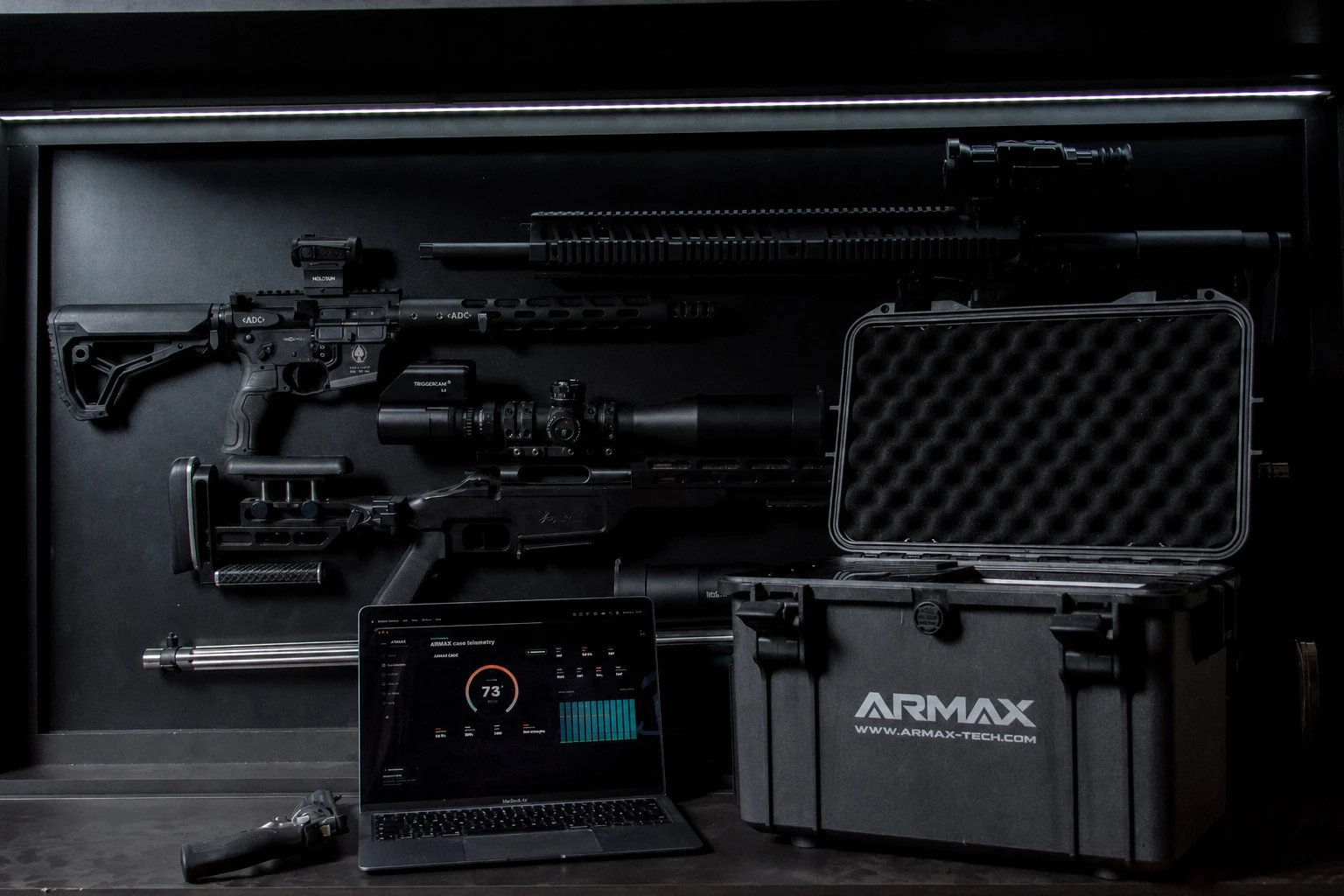
The first ARMAX bore little resemblance to the system it is today. It was a hand-built engineering test platform assembled from off-the-shelf modules, development boards, provisional wiring, and custom-fabricated mechanical parts. Its job was not to look finished. It was built to validate thermal behavior, control logic, power architecture, and field workflow under real competitive use—and to reveal exactly what needed to change.
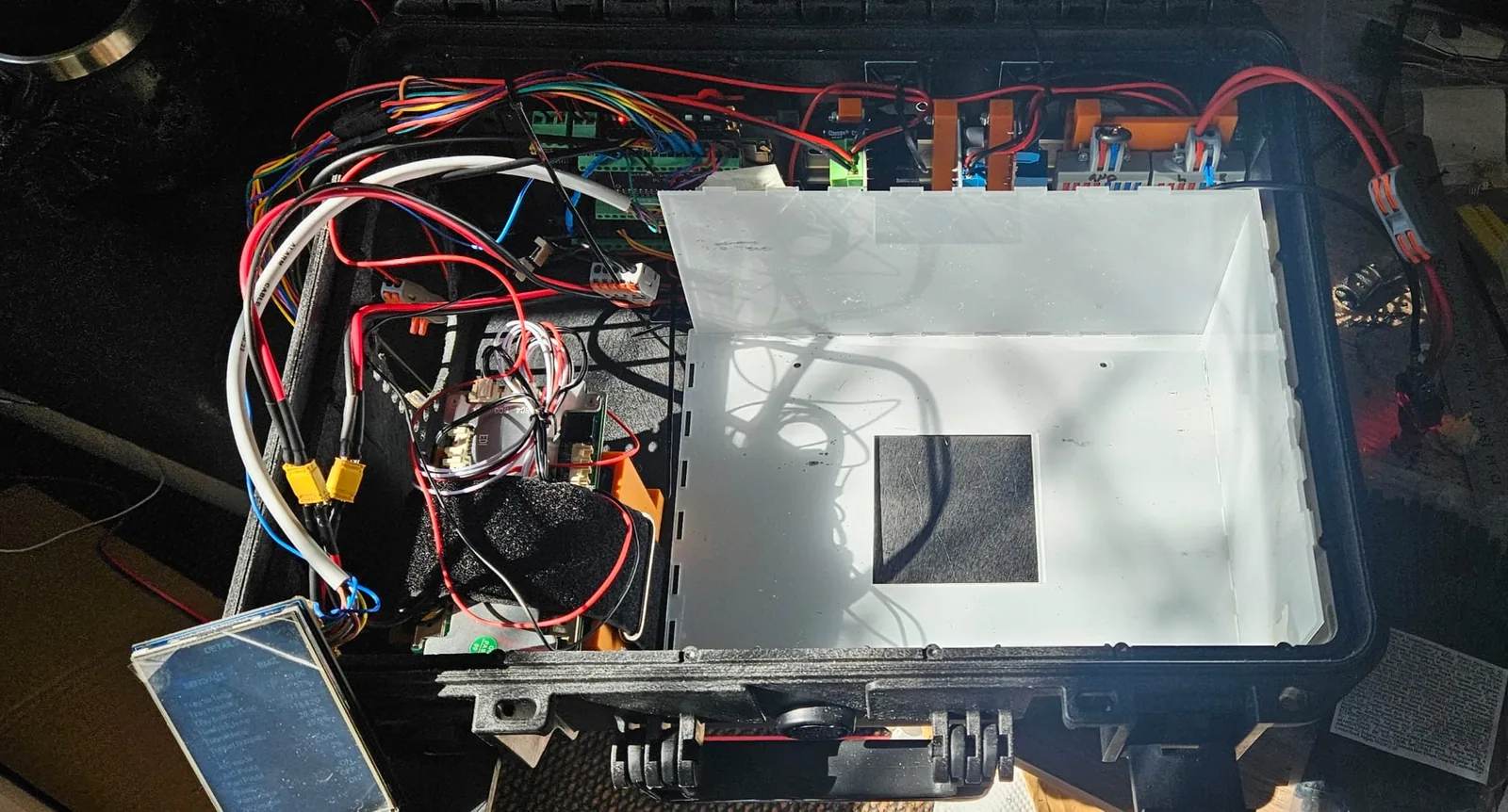
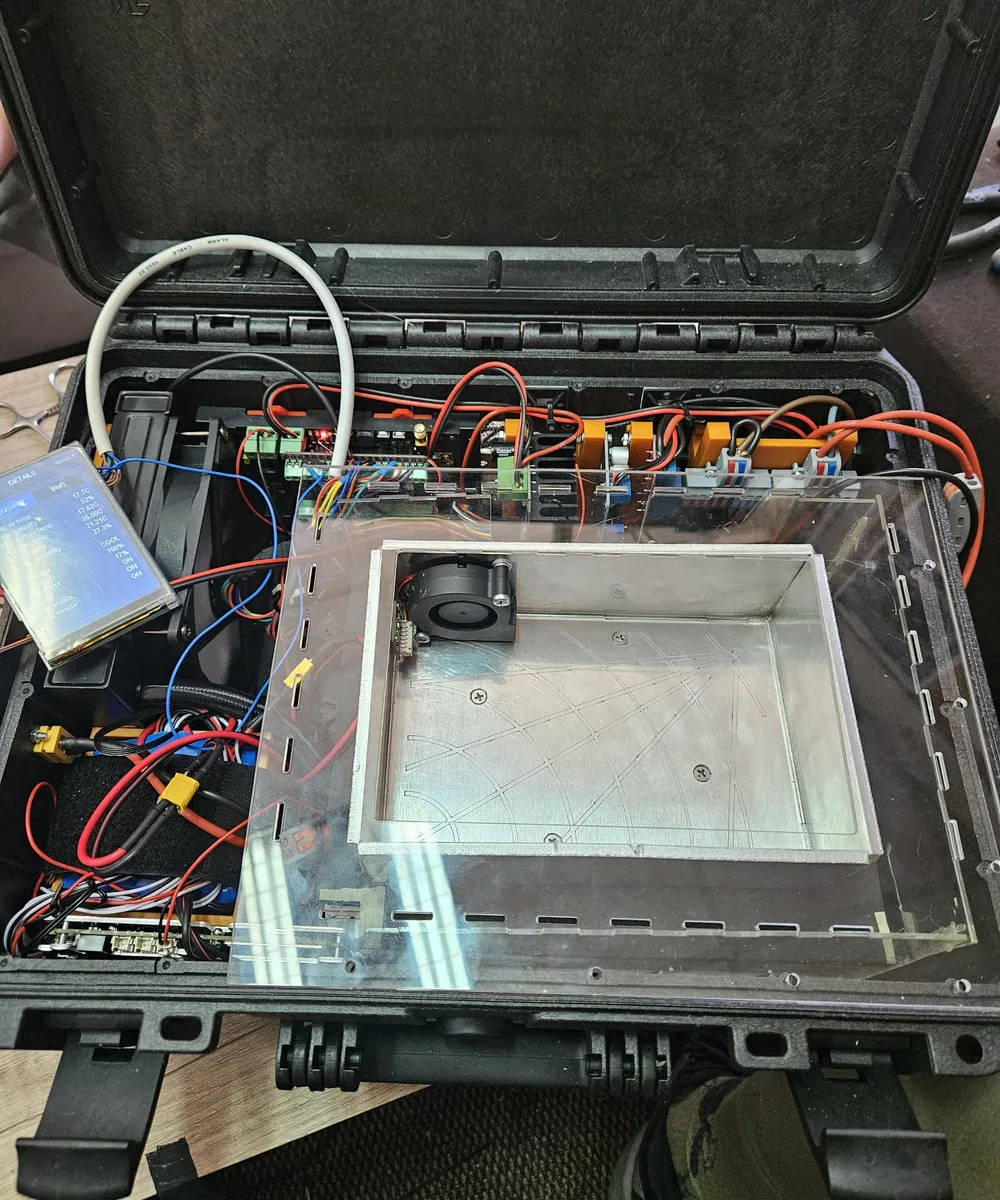
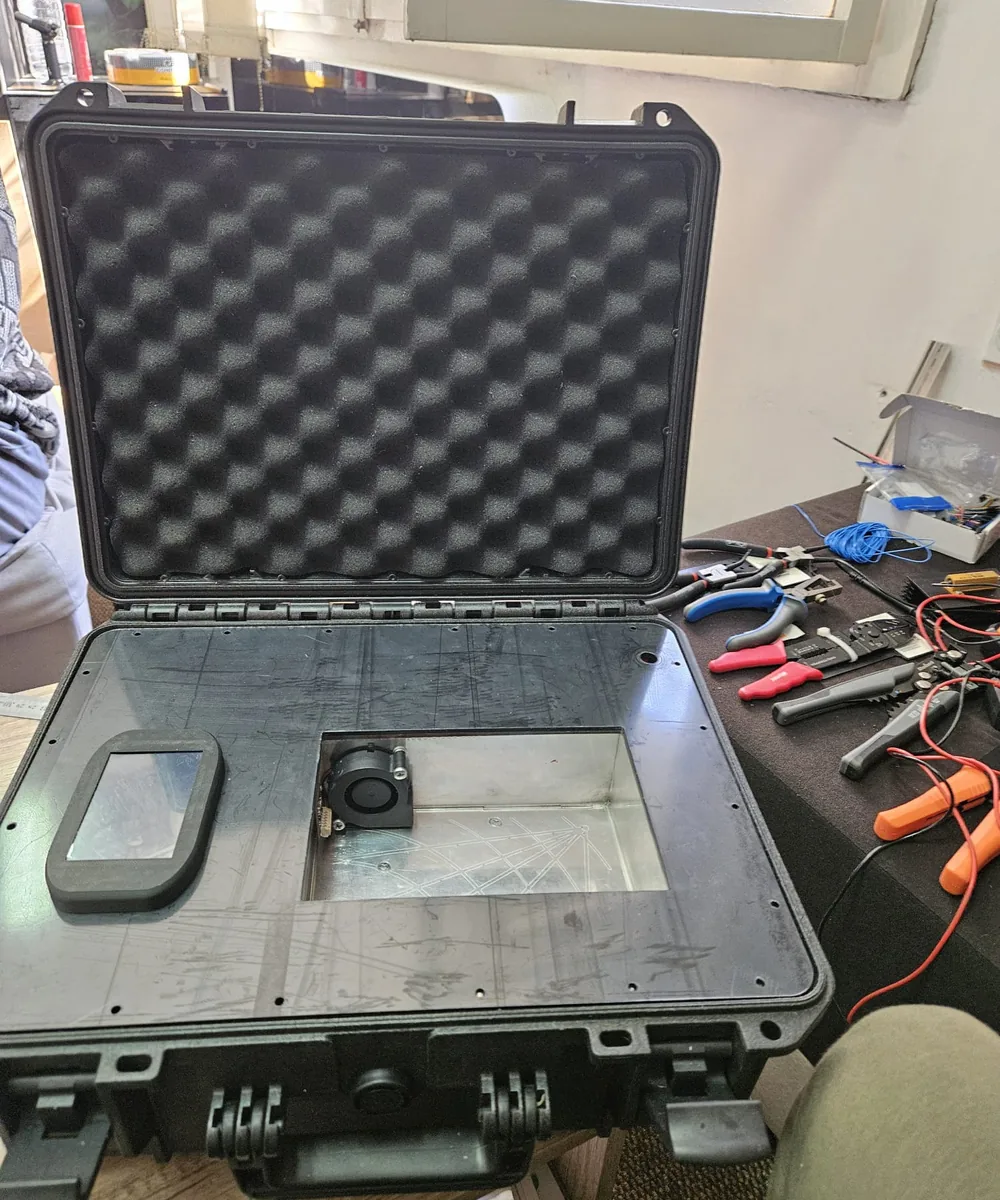
The first ARMAX.Hand-built development prototype — not a production unit.
Before the system moved beyond the prototype stage, the first unit entered a six-month field-test program with one of Europe’s leading competitive long-range shooters. The objective was not a ceremonial endorsement. It was to expose weaknesses under real range, transport, and competition conditions.
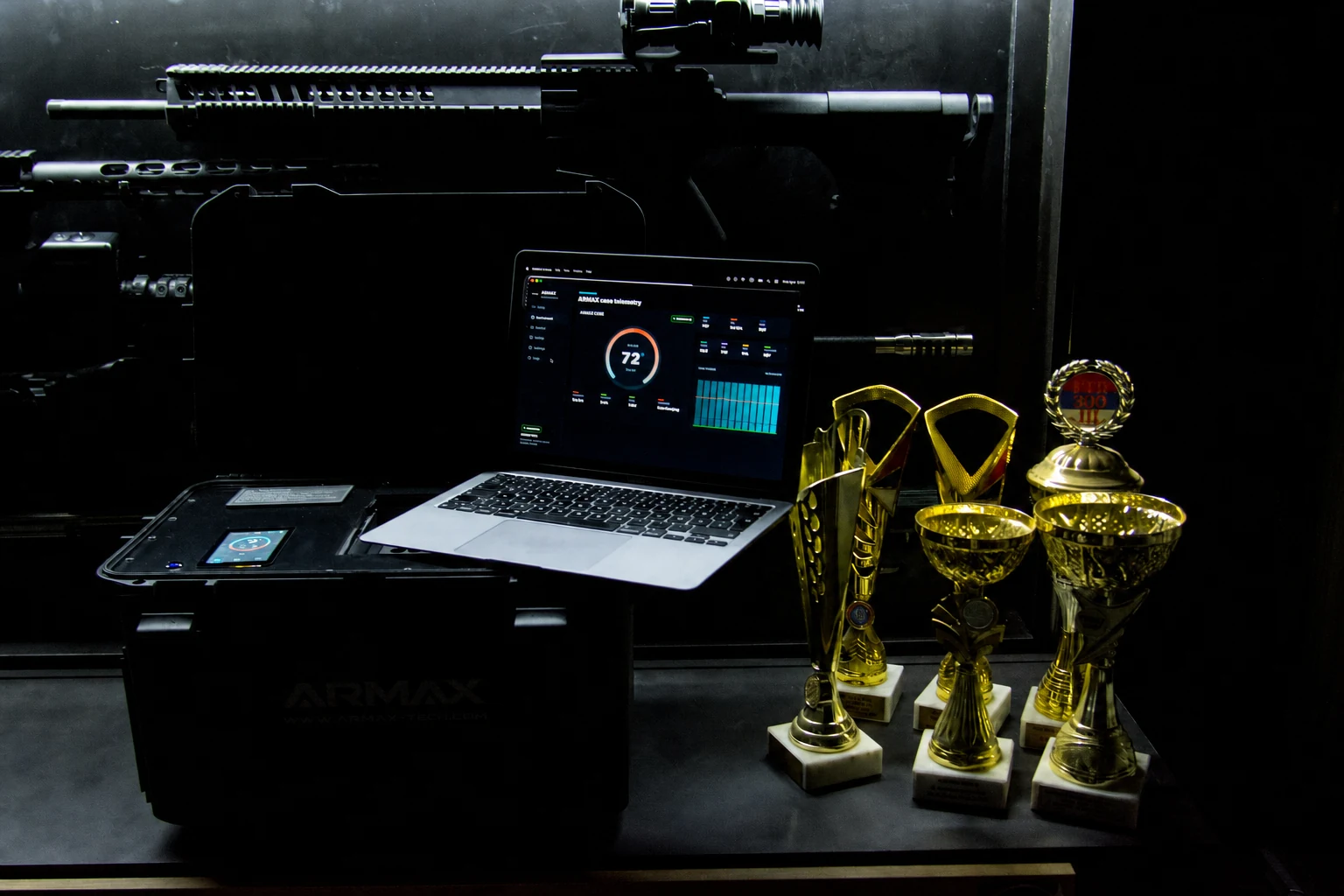
That shooter’s feedback drove major changes across the product: field workflow, mechanical details, control behavior, thermal performance, usability, and the way live system information is presented. The result was not simply a refined prototype, but a clearer engineering standard for the production platform.
Built by a team, engineered as one system
ARMAX is developed by a multidisciplinary team of experienced control and automation engineers, electronics engineers, mechanical engineers, and mechanical design and product-development engineers. Together, they bring decades of combined experience in thermal management, embedded control, sensor integration, electronics, structural design, manufacturing, calibration, testing, and quality assurance.
Heating, cooling, humidity management, power architecture, telemetry, software, mechanical construction, and factory calibration are not treated as separate features. They are engineered as parts of one integrated system, with each discipline accountable to the performance of the whole.
“The first prototype solved a problem for one competitor. Six months of elite field testing showed exactly what had to change. Everything that followed was engineering.”